How much does it cost to manufacture a working prototype?
It depends on the level of technical uncertainty of your invention's main functions, not on the price of materials or of similar products. As a reference, the basic engineering project costs between $8,000 and $18,000, and below you have eight real examples with their price range.
To find out the price for your case, use the calculator: in a few minutes you get an estimate and, afterwards, a free evaluation of your idea to define a fixed price.
Calculate the price of your prototype
Answer 6 questions about your invention and get an estimate of prices, timelines and payment terms. No commitment.
- Instant estimate, on screen
- Our team receives your inquiry and contacts you
- Free evaluation of your idea to define a fixed price
- Your data is only used to handle your request
Based on the information you have provided, and without any commitment on the part of Let’s Prototype, the results of your calculation are:

“If we take the right steps, we can offer a fixed price for the prototype creation process. Conversely, clients who propose skipping the preliminary phases add uncertainty to the prototype manufacturing process and to its prices.”
Iván Bedia García · CEO & Technical lead
Demand a fixed price. Watch the video.

Prototyping companies and engineering firms often issue quotes that do not include 100% of the work cycles needed to obtain an innovative prototype. Watch on YouTube
What does the price of a functional prototype depend on?
Price = (Base_cost + ∑Disciplines) × Factor_Incertidumbre ÷ Factor_Experiencia
Minimum cost of the services: the structural capacity of the prototyping lab.
Engineering areas involved: firmware, software, industrial design, PCB, AI… The more disciplines, the higher the price.
Risk of technical feasibility or need to create unknown elements. It is the only multiplier and the one that raises the price the most.
The team’s familiarity with the technologies the prototype requires. It is the only variable that lowers the price substantially.
Technical uncertainty is what makes a prototype most expensive
The prototype creation process involves two types of work: research and execution.
Where the innovative way of solving each function is invented. This is the most expensive work.
They can be hour-intensive, but they do not concentrate uncertainty.
That is why the price is determined, above all, by the level of technical uncertainty associated with the prototype’s main functions.
Two ideas worth dismantling
Knowing how much a functional prototype costs is key before you launch into developing an innovative product. Prototyping consumes money, energy and time, the three scarcest resources of an inventor or entrepreneur. Before calculating anything, it is worth dismantling two ideas shared by more than 90% of novice inventors.
3D-printing the parts, the housing, a PCB, motors, a battery and sensors does not add up to 1% of the manufacturing price of a functional prototype. What you pay for is engineering work.
If you want to create a drone with a unique geometry, it doesn’t matter that other drones exist: mechanics must analyze its airworthiness, electronics must design the custom electronics, and programming must write the software from scratch. The existence of similar products clears up technical feasibility, but it does not reduce the cost of the prototype.
Estimated price, timelines and payment terms
These are estimates based on basic information and on our experience. Most engineering firms work with monthly payments or hourly rates, a formula that is inconvenient for individuals and small companies because they can never calculate the real price of the finished prototype. That is why we evaluate your idea for free, measure the real scope of the innovation and define a fixed price.
Basic Engineering Project
- Industrial and mechanical designs required
- Definition of the solution at a conceptual level
- Digital and physical experiments in the laboratory
- Definition of components, parts and pieces
- Book of estimated drawings and materials study
- Technical feasibility manual and manufacturing budget for the prototype
Manufacturing your prototype
- Delivery of 1 unit of the functional prototype
- Book of parts and pieces developed
- 3D files and bill of materials
- Manufacturable PCB files (if applicable)
- Source code, firmware and mathematical models (if applicable)
Patent in the United States and Europe
- The price depends on the type of invention and the countries of protection
- Patenting too early is one of the most expensive mistakes: discover the 3 most common errors
Payment terms and timelines are indicative and are defined once the details of the invention are known, in the requirements-gathering meeting.
Examples of real prototypes and their price range
Eight cases from our laboratory, ordered from lowest to highest complexity, to give you an idea. The ranges include the engineering and the manufacturing of the first functional prototype.
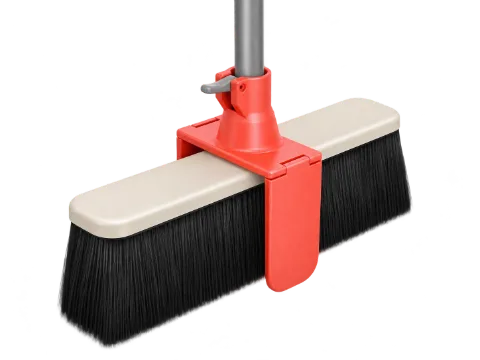
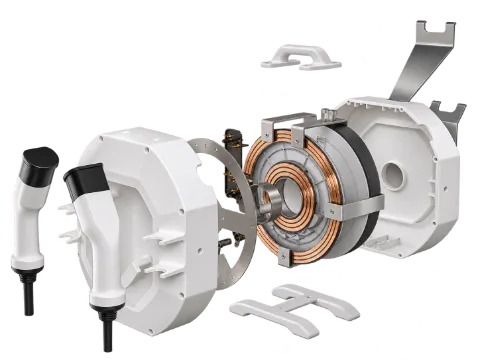
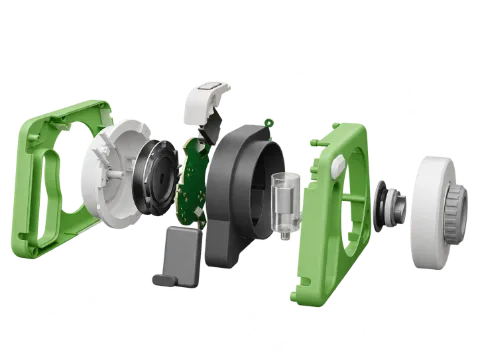
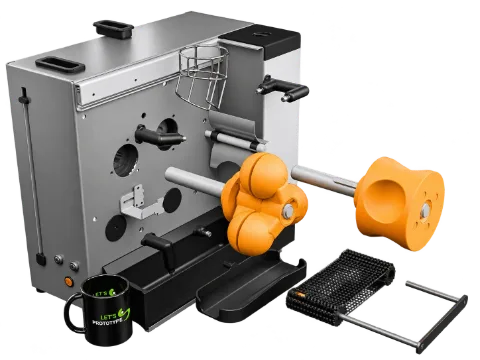
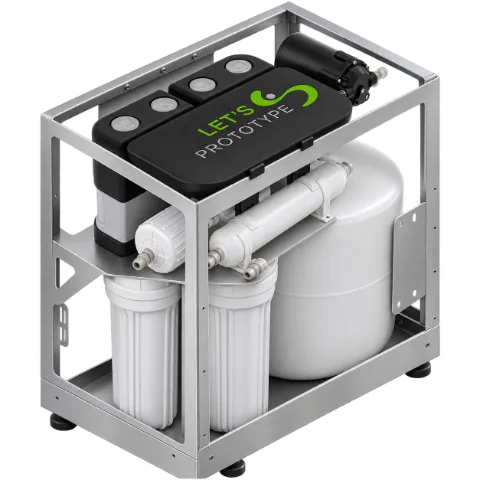
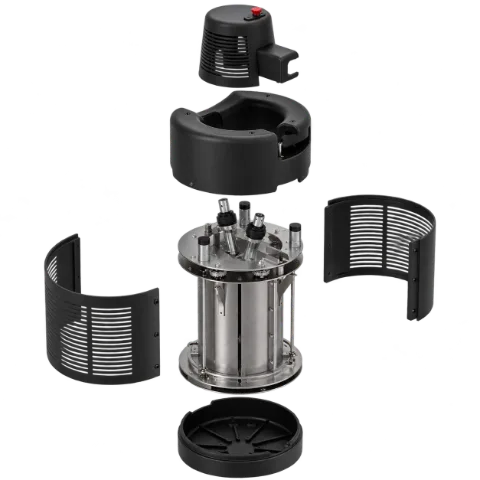
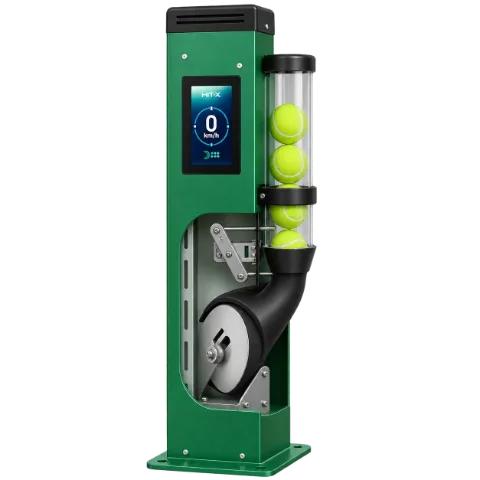

Indicative ranges: they depend on technical complexity, the disciplines involved and the uncertainty of each invention. The fixed price is defined after analyzing your case.
We want to bring your ideas to life
PROTOTYPE CATALOG
You can now access more than 100 examples of prototypes designed and manufactured in our lab
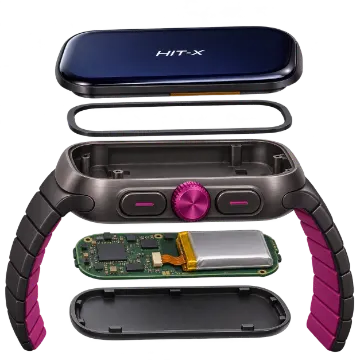 Prototype Examples
The prototype is the first unit of an invention: it brings it to life and demonstrates its technical feasibility, and it is not comparable to the future price of the product on the market. Tesla raised more than $150 million between 2003 and 2008 to reach its first electric car, and today each unit sells for a fraction of what that development cost. The prototype is not an expense, it is an investment: a learning cycle that demonstrates technical and also economic feasibility, and lets you reduce the number of parts, analyze industrial manufacturing, choose electronic components and simplify complex mechanisms.
How to reduce the cost of manufacturing a functional prototype?
A functional prototype can concentrate many technical risk points. A common way to split the price is to limit the technical challenges and build an MVP (minimum viable product) instead of a functional prototype.
There are several types of prototype that come before the functional one. Handmade or home-made versions reduce technical challenges and let you validate before investing. Learn about the types of prototypes.
A partner with manufacturing capacity can reduce the immediate investment, but you will pay for the prototyping with part of the ownership of the company: it is much more expensive than the standard price of a functional prototype.
Prototyping is a cycle that requires highly talented, and therefore very well paid, profiles. Any saving on prototyping you will end up paying multiplied by “X” in the industrialization of the product. Cheap prototyping companies usually follow that strategy for two reasons: they have no serious projects that justify the best profiles, or they target undemanding clients with little chance of reaching the market.
Frequently asked questions about the price of a prototype
How much does it cost to manufacture a working prototype?
It depends mainly on the level of technical uncertainty of the prototype’s main functions and on the number of engineering disciplines involved, not on the price of materials. As a reference, the basic engineering project costs between $8,000 and $18,000, and in the examples above you can see the total range of eight real prototypes. For your case, use the calculator.
Why doesn’t the price of a prototype depend on materials?
Because materials (3D-printed parts, housings, PCBs, motors, batteries and sensors) do not add up to 1% of the manufacturing price of a functional prototype. What you pay for is the research and engineering work needed for the invention to work.
What factors raise or lower the price of a prototype?
The price is raised by the lab’s base cost, the sum of technical disciplines (electronics, software, industrial design, AI…) and, above all, the uncertainty factor, which is the only multiplier. It is lowered by the experience factor: the team’s familiarity with the technologies the prototype requires.
Can you get a fixed price for a prototype?
Yes, if the right steps are taken: first the invention is defined and its feasibility is demonstrated in a basic engineering project and, with that information, the manufacturing price of the prototype is closed. Clients who propose skipping the preliminary phases add uncertainty to the process and to the prices. We evaluate your idea for free to measure the real scope of the innovation.
How long does it take to build a prototype?
As an estimate, the basic engineering project takes between 60 and 100 days and building the prototype between 90 and 120 days. Exact timelines are defined once the details of the invention are known.
How is prototype development paid for?
Basic engineering is paid in three milestones: 30% when the project is activated, 40% when the proposed solution is defined and 30% on completion. Building the prototype is also paid in three: 30% when the process is activated, 30% at a relevant project milestone and 40% on completion.
Why be wary of a very cheap prototype?
Because any saving on prototyping you end up paying, multiplied by “X”, in the industrialization of the product. Prototyping requires highly talented, and therefore very well paid, profiles.
How can I reduce the price of my prototype?
There are three strategies: limit technical uncertainty and build an MVP instead of a functional prototype, start with simpler or home-made prototypes, or bring in industrial partners, although this last option usually turns out more expensive because it is paid for with part of the ownership of the company.
Is the price of the prototype the same as that of the final product?
No. The budget of a prototype is unrelated to the price the product will have on the market. The prototype is an investment: a learning cycle that demonstrates technical and economic feasibility before industrializing.
How much does it cost to patent my invention after prototyping?
It depends on the type of invention and the countries in which you want to protect it. You can estimate it with the patent price calculator. Remember that patenting before prototyping is one of the most frequent mistakes.
Let’s talk about your project
We are aware of how important it is to protect information. For this reason, we only ask for superficial, basic details that allow us to assign your project internally.
See also
 Talk to an expert in startups and new business developmentErick Remedios · Director of Business Development