Free collection
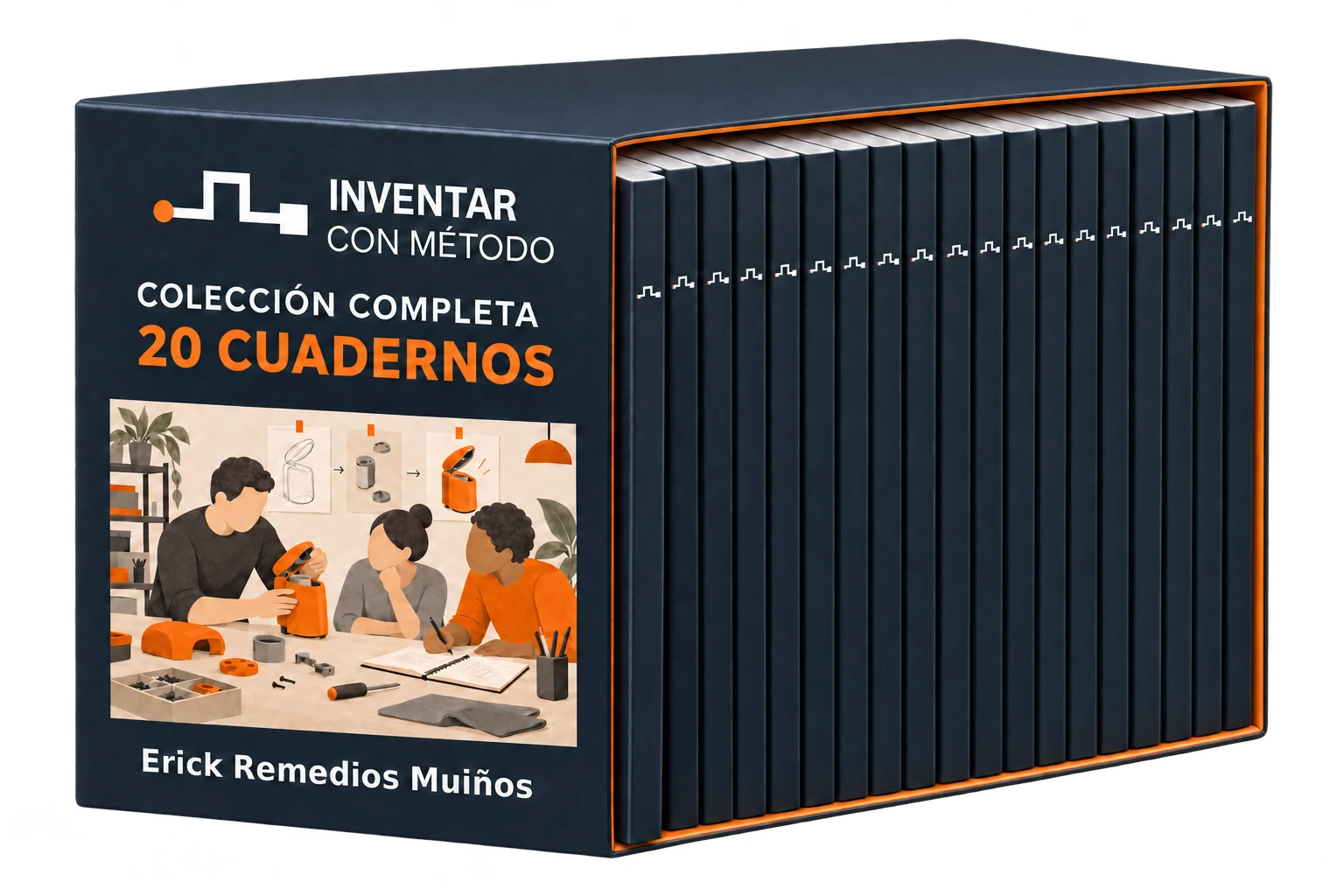
Inventing with Method: 20 Notebooks for Inventors
A collection of 20 practical notebooks to turn an idea into a product: from discovering what kind of inventor you are to taking your product to market. You can already request notebooks 1 to 4 and we will email them to you; the rest are published as they are finished.
- 20 notebooks
- 4 available now
- Free, by email
- In Spanish and English
By Erick Remedios Muiños, Business Development Director at Let’s Prototype.
How it is organized
A journey from idea to market
The notebooks follow the Lean Prototyping method: each stage answers the questions that must be resolved before committing more time and money. You can start with the one you need most.
- Notebooks 1–6The idea
What kind of inventor you are, how to spot opportunities and the full map of the process.
- Notebooks 7–11Research
Prior art, technical study, hypotheses and experiments before you spend.
- Notebooks 12–15Prototype Cost
What prototype you need, how it is built, how much it costs and with which tools.
- Notebooks 16–20Protection and business
What to protect and when, the business model, mass production and the market.
The 20 notebooks
Choose your notebook
Each card summarizes what you will work on. Notebooks 1 to 4 are ready: tick them and we will email them to you.
What Type of Inventor Are You?
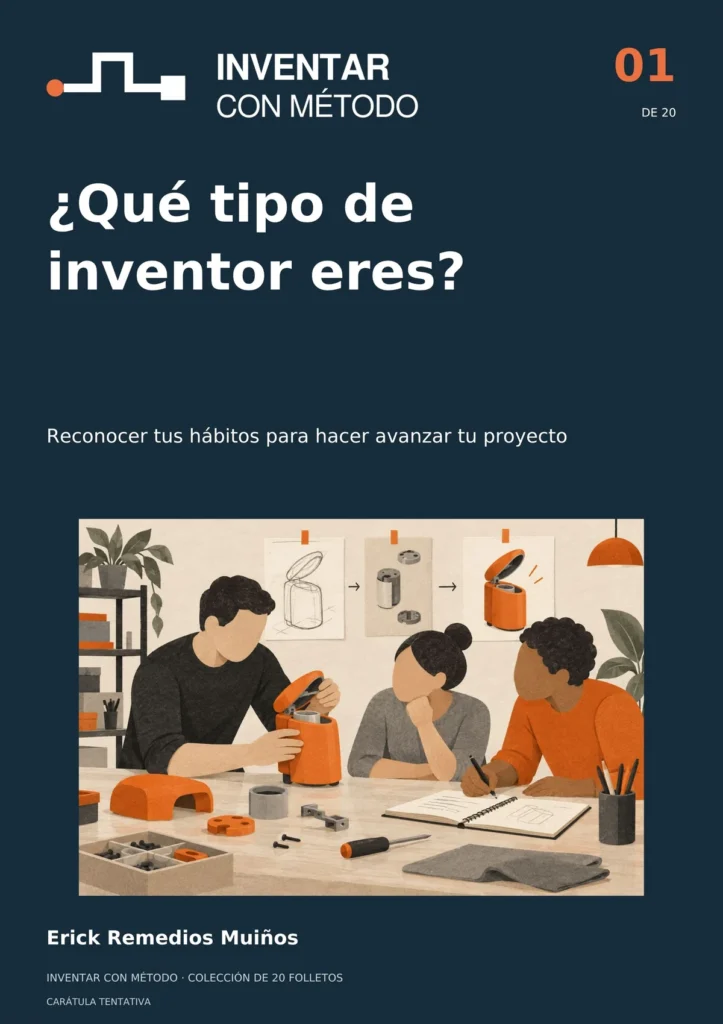
Before talking about your invention, it is worth observing how you make decisions. In this notebook I introduce five profiles I have found while working with inventors: Pelotazo (the lucky-break seeker), Metralleta (the machine gun), Dependiente (the dependent), Anónimo (the anonymous) and Estratega (the strategist). You may recognize yourself in several. Each brings strengths, but also behaviors that can hold a project back.
The experience of Neurobia Research shows that even a team with a great deal of knowledge can spend years perfecting an answer without sufficiently understanding its usefulness to the user. The final questionnaire will help you recognize your habits and turn the reading into a concrete decision for your project.
Transform and educate the inventor within you
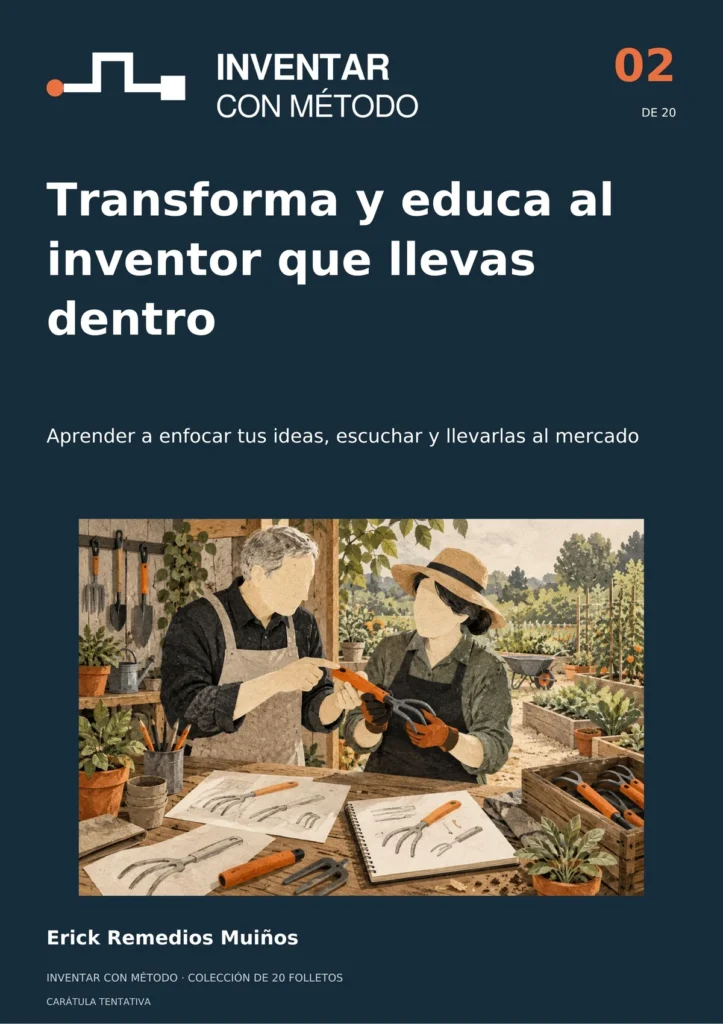
Juan was 68 when I met him and had founded his company at 24. His story begins in gardens, imagining improvements to the tools he worked with, and ends by showing us how much he had to learn to develop, sell and sustain his own products. The industrial opportunity opened a door; bringing the product to buyers demanded another kind of learning.
Based on his experience, we will work on three essential habits: staying close to the problem, telling interest apart from a sale, and focusing effort in one direction. The activities will help you choose which project to prioritize, what you need to verify and whom you should listen to before you keep developing.
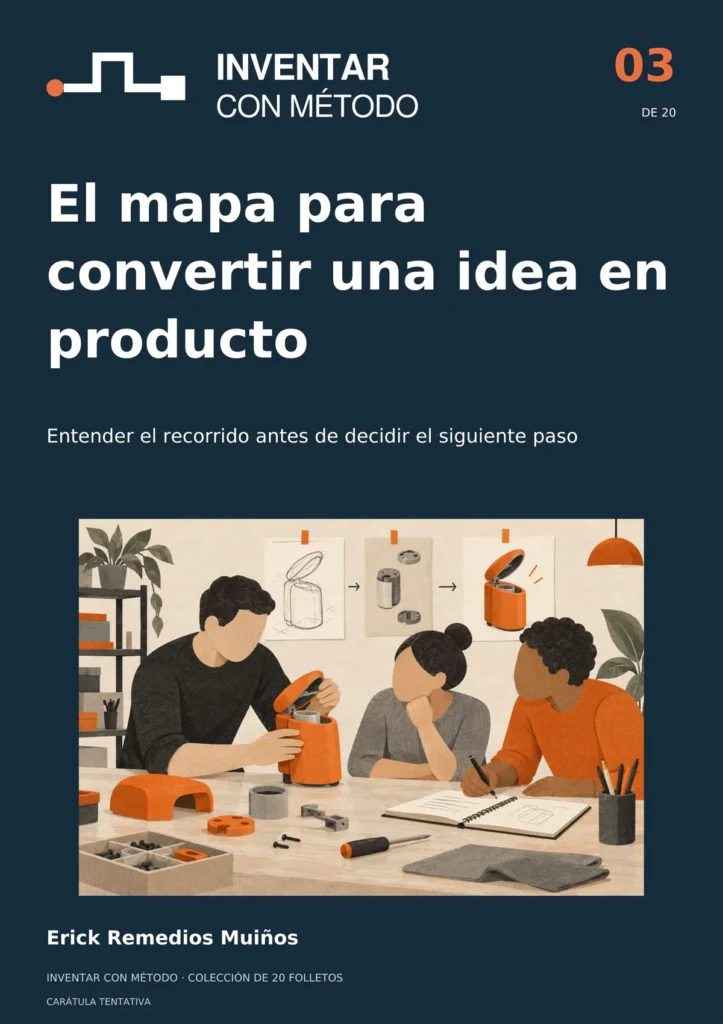
The map to turn an idea into a product
This is the map that connects the whole collection. We go through the eleven steps of Lean Prototyping to understand what each stage contributes and what happens when we commit time, energy and money without resolving the earlier questions. The method comes from patterns I have observed in projects that move forward, in failures and in our own mistakes.
Maly, Ignacio, and Fede and Nathy, with Rinxor, put faces to three common leaps: protecting too early, manufacturing without enough research and engineering, and mistaking a working prototype for a product ready for industry. The workbook will let you reconstruct your journey, separate evidence from assumptions and decide where to focus your next investment.
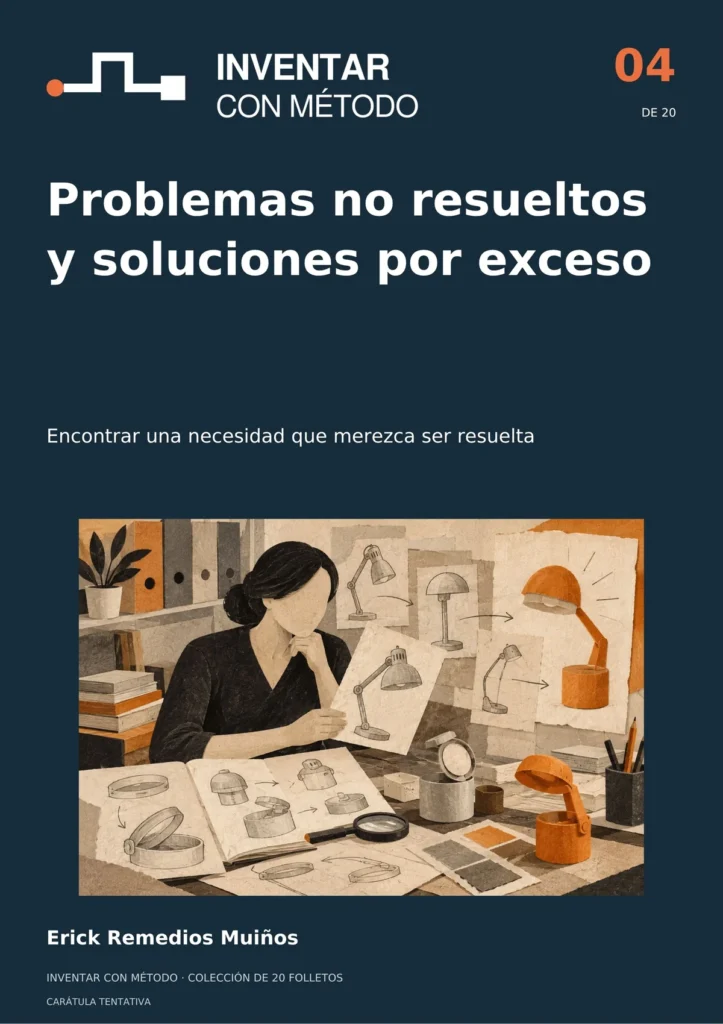
Unsolved problems and over-engineered solutions
Opportunities appear when we learn to observe what is still uncomfortable and which solutions add more obligations than necessary. Capsule coffee helps us understand the value of immediacy: enjoying a cup when you feel like it, with little time and few steps. The experience of the Cigar Humidity Controller shows how a conversation about annoying notifications opened the way to a product that is simpler to use.
Through these experiences and other examples, we will review what the user really needs and which functions deserve to be in the product. Five activities will help you describe the problem, study how it is solved today and explain what improvement you propose and why it would be valuable.
Demographic shifts and new technologies
Changes in population, customs and available technologies open opportunities for those who know how to observe them. In my experience, needs related to people’s mobility, food, leisure and aging have given rise to very different projects. A technology conceived for one industry can also solve problems in another.
This notebook proposes connecting those changes with concrete situations of use. The key will be to understand what new possibility has value for someone and to prevent enthusiasm for a sensor, a material or a technology from making us lose sight of the problem we want to solve.
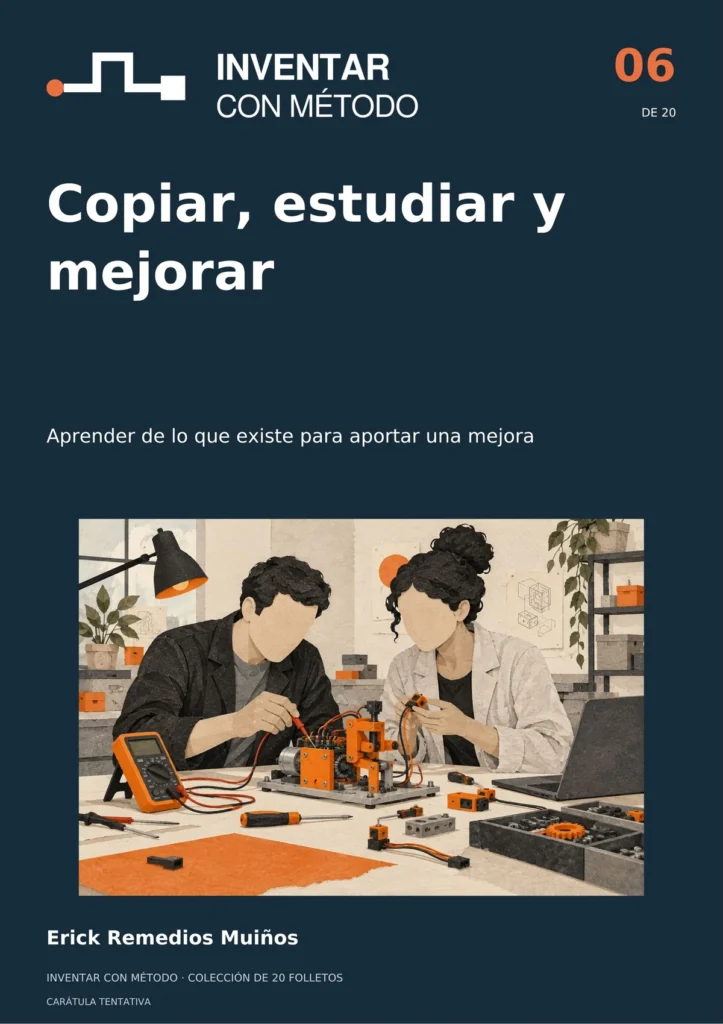
Copy, study and improve
To improve a product you have to know it closely: use it, study its alternatives and observe what people do when they hold it in their hands. In the manuscript I share how watching training sessions with ball-throwing machines helped us question a function that would have added complexity without a real need of use to justify it.
The goal of this notebook is to learn from what already exists in order to identify a meaningful improvement. Comparing functions, studying reviews and testing alternatives lets you concentrate innovation where the customer perceives value, while respecting the work and rights of third parties.
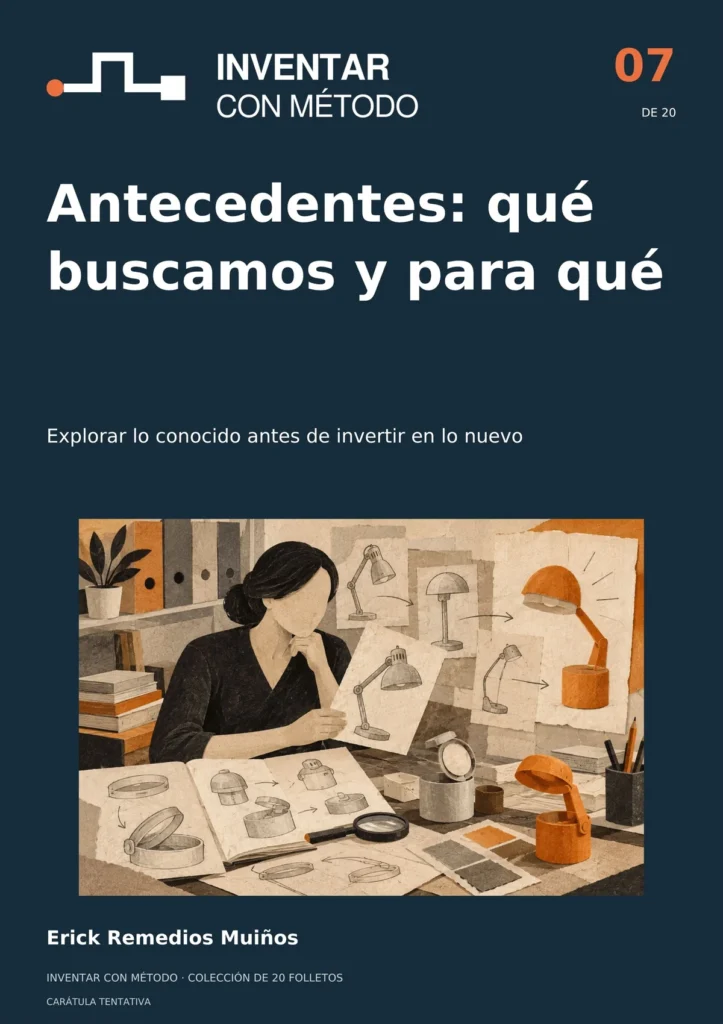
Prior art: what we look for and why
Finding something similar to your idea can be one of the most useful pieces of news in the process. A prior art study lets you discover how similar problems have been approached, what solutions exist and which questions remain open. Its value lies in guiding innovation and avoiding investments based on ignorance.
This notebook will clarify what information we look for and why we need it: products, technical alternatives, patent documents and ways of solving each function. The research will help build criteria for development and prepare the questions that will later need to be checked with the relevant professionals.
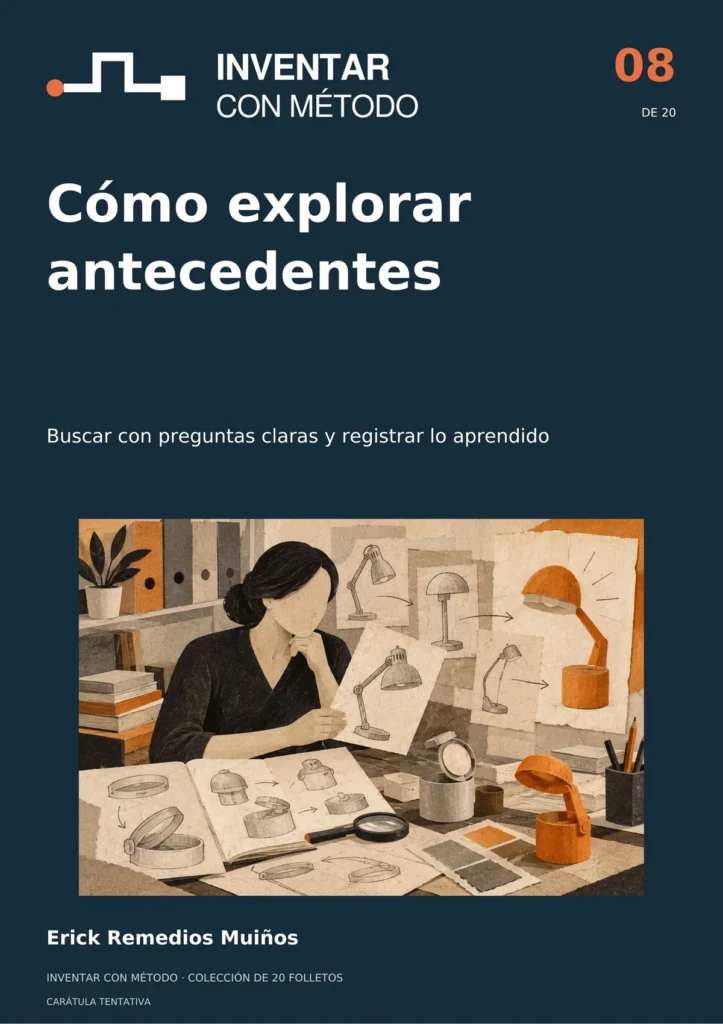
How to explore prior art
Searching for prior art takes more than typing the name of the invention into a search engine. In your research you can combine words and expressions, patent classifications, and searches by owners or competitors. Each route can find documents that other searches may leave out.
The notebook focuses on organizing that work: breaking the product down into functions, recording sources, comparing results and keeping useful traceability. The goal is to turn hours of searching into knowledge that lets you decide what to explore, what to discard and where an improvement might be found.
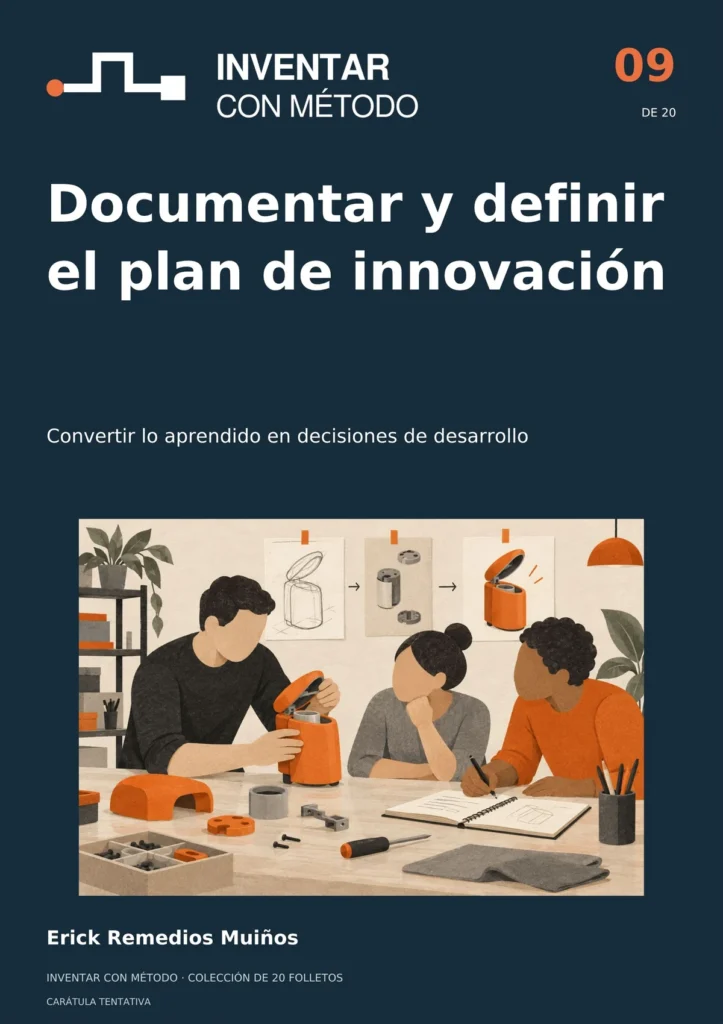
Documenting and defining the innovation plan
Accumulating links and documents does not complete the prior art study. The work starts to pay off when you can explain what you have learned, how your product’s functions have been solved and why it is worth researching an alternative. That synthesis shapes the innovation plan.
This notebook proposes turning the research into a development guide: functions, alternatives, limitations and improvements to verify. The result should help you talk with the technical team, justify priorities and keep focus when decisions arise that affect cost, operation or the value of the product.
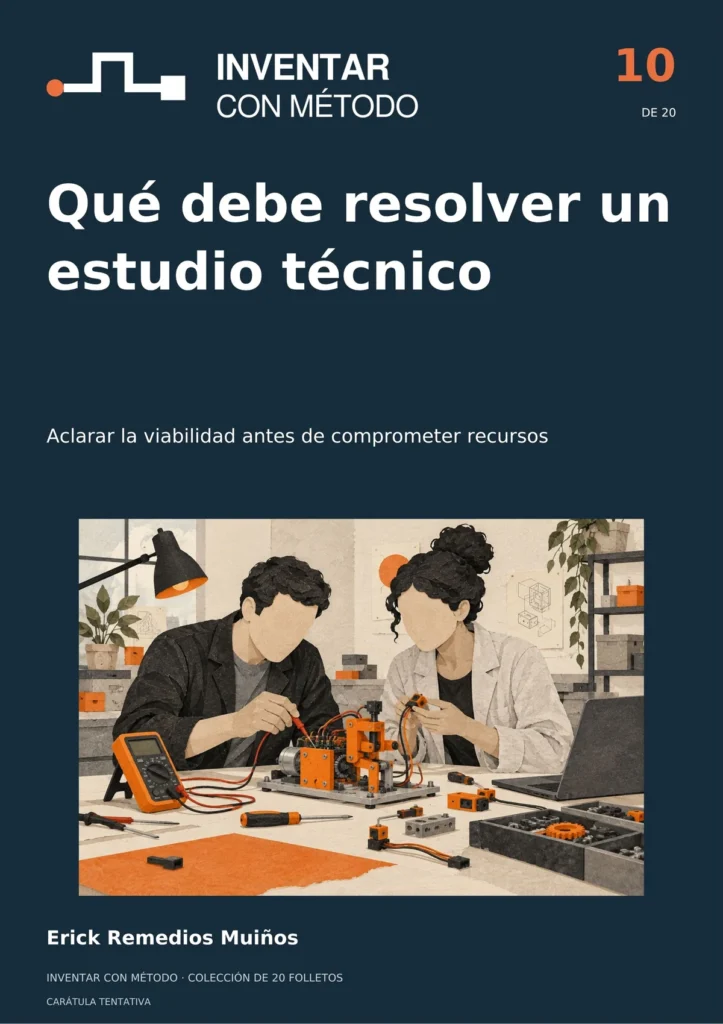
What a technical study must resolve
An idea can describe clearly what you want to achieve and leave almost everything unresolved about how to do it. The technical study addresses that distance: it identifies the challenges, compares alternatives and gathers evidence to choose a solution that can work and sustain a business. It is the stage in which we start inventing the invention.
The notebook will focus on the balance between technical and economic feasibility, experimentation and documenting decisions. It will also cover two common risks in development: spending engineering effort on problems that are already solved, and creating too early a dependency on a supplier or component that is hard to take on.
From hypotheses to experiments
Every project contains statements that seem true until the moment comes to test them. The challenge is to recognize which ones really determine feasibility and to design experiments that answer them before committing more resources. Breaking the problem down makes it easier to learn and to locate where the uncertainty is.
This notebook will address how to formulate a specific question, compare alternatives, define which result would be useful and document what happened. The involvement of the inventor and the combination of specialties help find solutions without getting trapped in the first way of making the product work.
Why you need a prototype and which one you need
Before commissioning a prototype, you need to explain what you want it for. Checking a function, studying the user experience, integrating several systems or presenting a proposal to potential collaborators are different goals and may require different models. The scope of the test must answer the uncertainty you want to resolve.
Based on the differences between function, appearance, implementation and integration, this notebook will relate prototype types to their technical and business goals. It will help you define what the next unit must demonstrate and which expectations should be clarified before starting to build it.
How a prototype is built
Building a prototype requires integrating decisions that could previously be studied separately: mechanics, electronics, software, design and user interaction. The first unit puts those decisions to work together and opens a cycle of tests, adjustments and new learning. The team’s experience and its ability to iterate play a decisive role.
This notebook will walk through the path from engineering goals and results to a unit that can be evaluated. The focus will be on verifying functions, documenting limitations and learning from changes, keeping in mind user needs and future manufacturing.
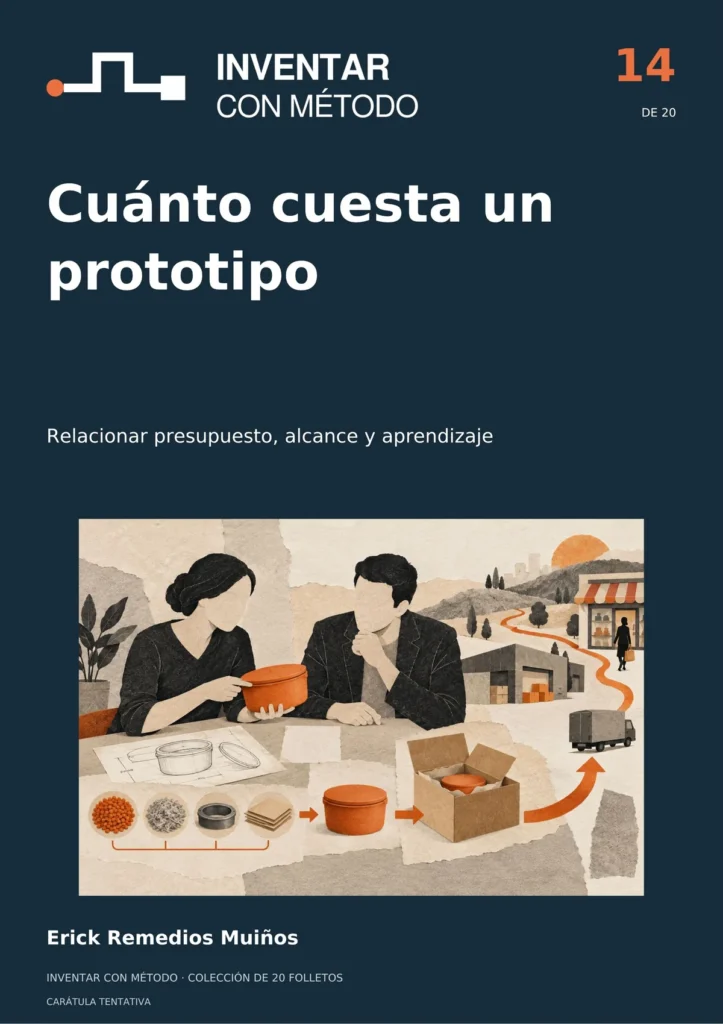
How much does a prototype cost
The price of a prototype depends on what is still to be discovered and on the result you need to obtain. Besides parts and assembly, it may include research, design, electronics, programming, integration and testing. Comparing quotes without understanding those differences can lead you to choose a proposal that leaves important questions unresolved.
This notebook proposes relating budget, scope and learning. The goal is to help you understand what you are hiring, which deliverables you expect and which decisions you will be able to make afterwards. It will also review why an initial saving can turn into a larger cost when the project reaches advanced stages.
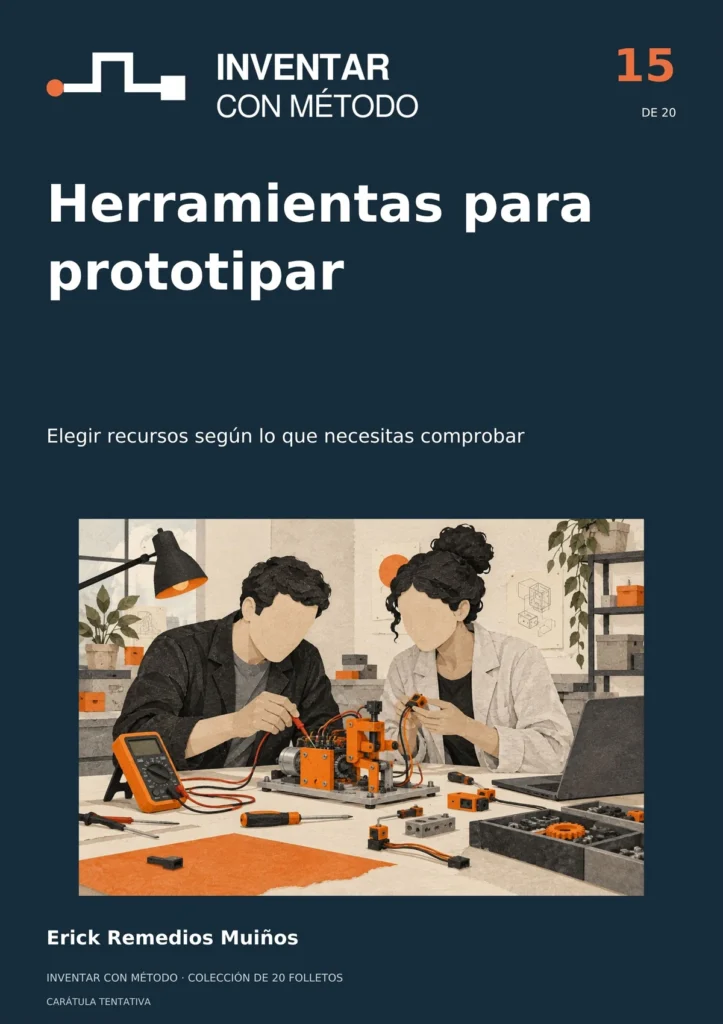
Tools for prototyping
Prototyping tools make sense when they let you answer a question in the project. Part manufacturing, materials, electronic resources and software development offer different paths to test a solution. Choosing them requires understanding what you need to verify and which limitations you can accept during that test.
The notebook will bring the inventor closer to development resources, from manufacturing techniques to electronics and mathematical models. The intention is to make for a useful conversation with the development team and to understand how each tool contributes to learning and to the integration of the product.
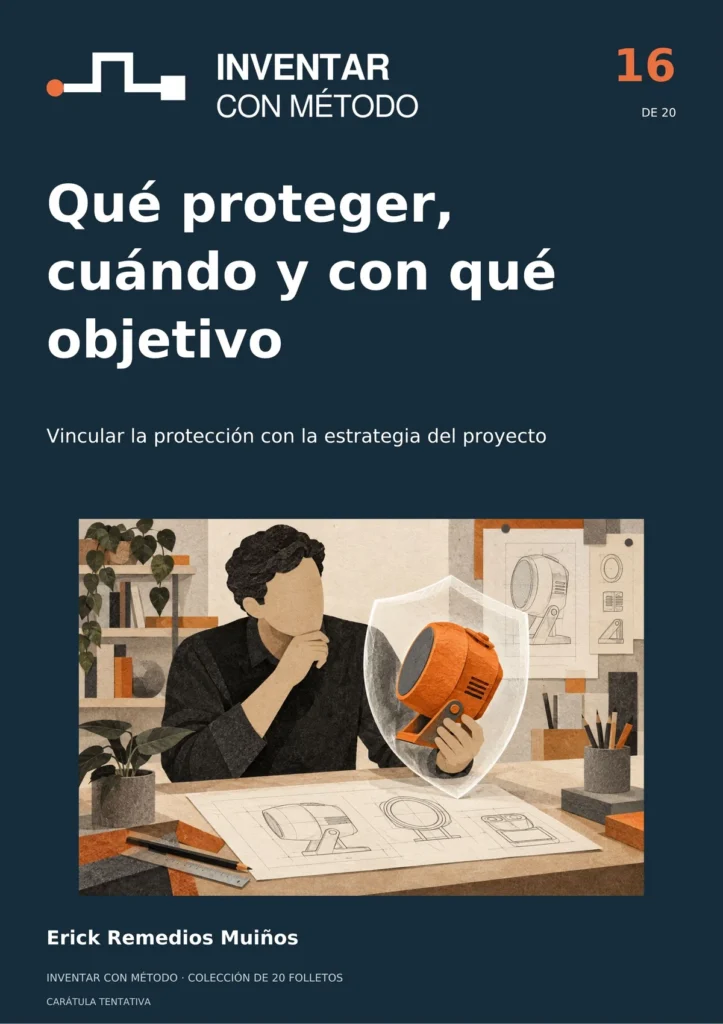
What to protect, when and with what goal
Protection is part of the project strategy and must relate to what you have developed, the information you need to share and your business goals. As you research and test, the solution changes and technical decisions appear that deserve specific assessment.
This notebook will put in order the questions the inventor should bring to a professional: which result they want to protect, when they need to decide, in which markets they intend to operate and what they will use that protection for. The purpose is to link the resources devoted to industrial property to the real progress of the product.
What a patent delivers and what it does not solve
A patent can play an important role in a project, but it remains to be shown that the product works, that it is useful to the customer and that a business can be built. The sense of progress produced by a registration can hide those questions and consume resources that will be needed to resolve them.
This notebook will address the value of the patent within the whole: what it contributes to the strategy and which tasks remain pending after obtaining it. The goal is to help you assess expectations, better understand conversations with potential partners and make protection decisions connected to the technical and commercial reality of your product.
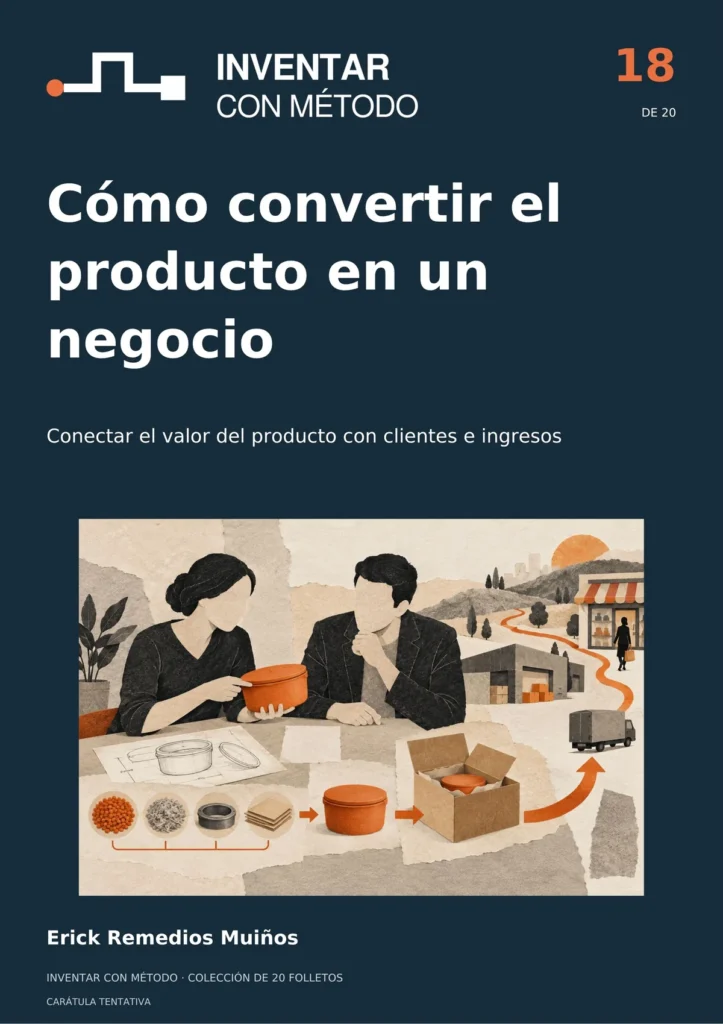
How to turn the product into a business
A useful product needs a way to reach the customer and generate enough income to sustain its development and exploitation. We will distinguish the business model, which explains how value is created and captured, from the business plan, which organizes objectives and resources to make it grow.
This notebook will connect the value proposition with customers, channels, activities, partners and costs. It will also pay attention to the capabilities the inventor needs to bring into the team to turn the product into a business opportunity they can carry forward.
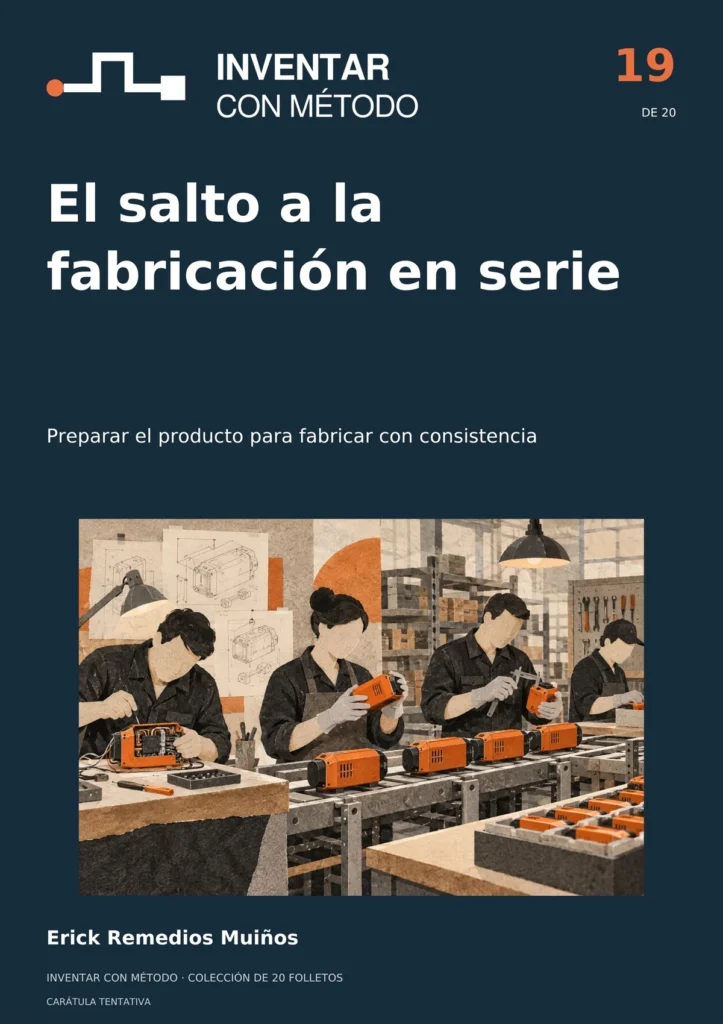
The leap to mass production
Getting one unit to work is a huge step. Manufacturing many of them consistently requires additional decisions about materials, geometries, processes, suppliers, controls, assembly and logistics. Committing to a production run before learning from real use can multiply a small flaw across thousands of units.
This notebook will develop the bridge between the prototype and industry: pre-series, usage tests, optimization and contrast with manufacturing constraints. The experience of Rinxor helps us understand why it is wise to gather that information before committing investments that are hard to correct, and how to balance operation, cost and customer experience.
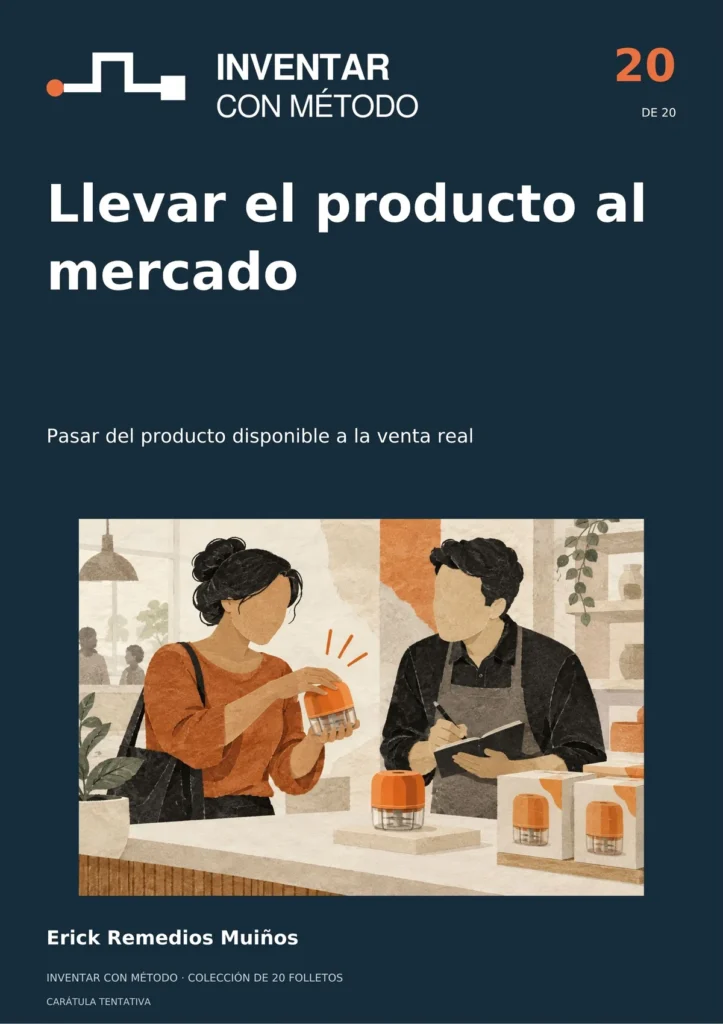
Taking the product to market
Taking the product to market requires understanding how the customer buys, what value they recognize and which channel makes the experience they expect easier. Setting a price requires looking beyond the manufacturing cost. Choosing the channel requires knowing the buyer’s behavior.
This notebook will close the journey by connecting product, price, distribution and commercial learning. The goal is to prepare for the arrival of the first customers and to use what happens in sales and in use to improve the proposal, sustain the business and decide its next steps.