Product Patent Types
Ways to register your inventions products ideas
Discover which type of patent is best suited for your case.
Book a free consultation
Let's talk about your invention
Book Appointment
Get your Guide now
Complete guide to patent types
There are different types of patents and procedures for the protection of industrial property of a new product.
The types of patents are more or less suitable for a product depending on where you want to patent it, what you want to patent, and when you want to patent it.
Types of patents based on: "what you want to patent"
There are 3 types of patents to protect new products, depending on the level of innovation involved.
Design protection safeguards the aesthetic appearance of a product — what can be perceived at a glance. It is suitable for products that aim to stand out through their visual look.
It is a weak form of protection. In theory, it covers minor changes in products that cannot qualify for a patent due to lack of novelty. Around 90% of inventors choose it by mistake.
Useful for protecting innovative products that, by introducing non-obvious changes, provide real added value to users. It is the most serious and rigorous protection method available.
Patent alternatives to protect an invention
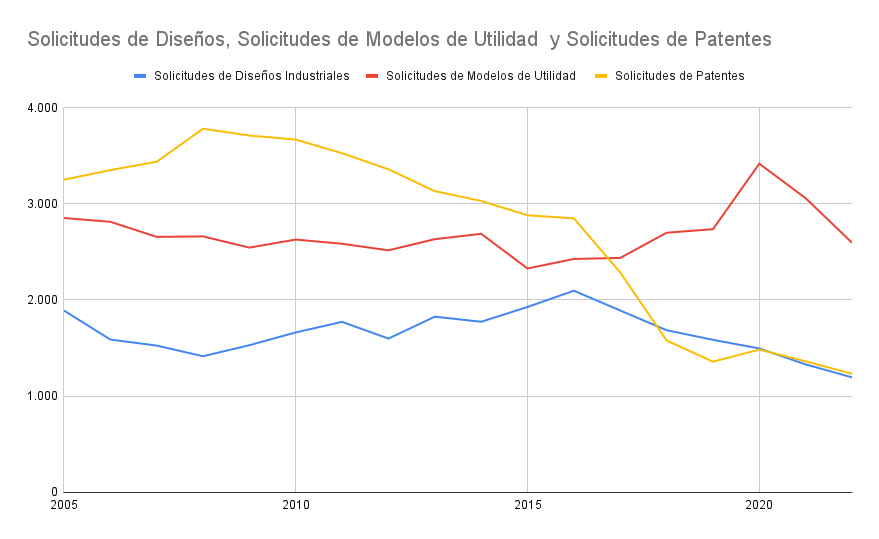
Source: Own elaboration based on public data from the Spanish Patent and Trademark Office.
“It’s true that the invention patent is no longer the type of patent most commonly chosen by inventors. In my view, this phenomenon is due to the lack of rigor with which Utility Models are granted in Spain, and to the significant lack of awareness among inventors about the alternative patent options available.”
Erick Remedios Muiños
Comparative table of patent types
Advantages and disadvantages of the main types of patents:
Duration | 25 years (Renewable in periods of 5 years) | 10 Years | 20 Years |
Innovation requirements | Aesthetic, geometries, shapes... | Weak | Strong |
Approval process | Does not require substantive examination | Does not require substantive examination | Requires substantive examination |
Taxes | 78 € | 86€ | 1200€ |
Market Price | Between €300 and 500€ | Between 1500€ and 3000€ | Between 7000€ and 15000€ |
Approval likelihood | 97% | 88% | 48% |
Ease of internationalization | + | – | + |
Which type of patent is most suitable for your invention?
Before investing your money in a patent, book a free appointment with our experts.
Types of patents based on where you need to file them
100% of patents must be filed with the patent office of a single country, not multiple ones as many inventors believe.
Strictly speaking, national patents are those that refer to inventions protected within a single market.
If your priority is to protect the industrial property of a product in several European countries at the same time, there are alternatives.
Although the category of European Patents has historically existed, the unified application process has been available only very recently.
The United States is the richest and safest market for patenting. The ideal environment for patents should be determined by the size of the market, legal security, and the presence of investment funds and major technology companies.
These factors make the American market the best country in which to file a patent.
Expedited procedures
The PCT is not a patent in itself. There is no such thing as a global patent.
The PCT is an expedited procedure that simplifies and speeds up the process of applying for a patent in multiple markets simultaneously.
Many inventors feel tempted to patent in China to prevent their products from being “copied.”
Patents protect or restrict the markets where a product can be commercialized. They do not determine where it can be manufactured.
Where is it best to patent an idea?
Types of patents based on when you need to file them.
Provisional patents only exist in the United States. This procedure marks the beginning of a preferential and confidential protection period that is useful for developing an invention.
Common questions about patent types
The invention patent in Europe, or utility patent in the United States, represents the best method for protecting a product.
The protection and exclusivity granted by a patent to the inventor of a product should be a sufficient legal instrument to defend authorship.
To be realistic, when a product is truly good and succeeds in the market, patents do get copied. These are the situations that reveal the difference between patents that are rigorously drafted and protected, and those that are not.
Absolutely not. You do not need a specific type of patent to market an innovative product. Patenting a product is optional.
Unlike Utility Models and Industrial Designs, patents are examined by a specialist at the patent office. Successfully passing this process is complex. This procedure is precisely what guarantees the authenticity and rigor of a patent.
Have you had ideas that ended up succeeding in the market in the hands of other inventors?
Inaction is the real mistake inventors make.

IDEA
We will analyze and document your idea for free. Also, if you let us, we will give you our vision as business consultants.

BACKGROUND
We identify patents similar to your invention or teach you how to do it for free.
DOCUMENTS
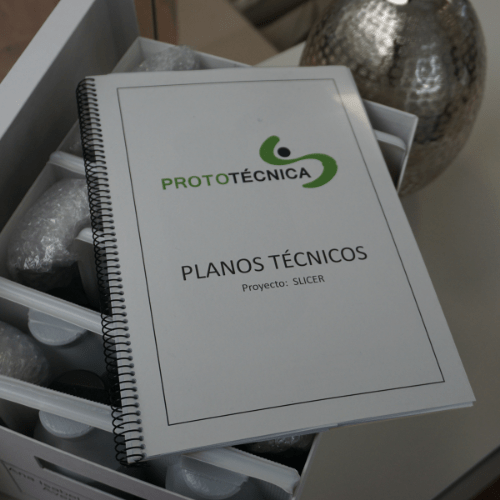
We will prepare together with you the necessary documents to patent your invention. We will select the form that best suits your case.
PATENTS
We present and monitor the entire process, until you get your patent. We will accompany you at all times.
Pasos comunes para cualquier tipo de patente
Analysis of the Idea or Invention
If you want to assess the feasibility of an invention and its business potential, we will conduct an analysis of product sales or similar inventions on major platforms, both in Europe and in the United States.
We can also assess the technical feasibility of an invention. We will determine the electronic components and forms that would allow achieving the functions and improvements you propose. This way, we can determine if an invention is viable.
The team of engineers and business and marketing personnel will work together on designing the preliminary strategy to protect or patent the invention in question.
50% of the inventors working with Let's Prototype are individuals or small businesses. For this reason, we always work with fully closed budgets in all cases. It is essential for us that clients have a complete understanding of the economic impact of the invention's development and patent strategy.
We want to bring your ideas to life
CATALOG OF
PROTOTYPES
You can now access over 30 examples of prototypes designed and manufactured in our lab
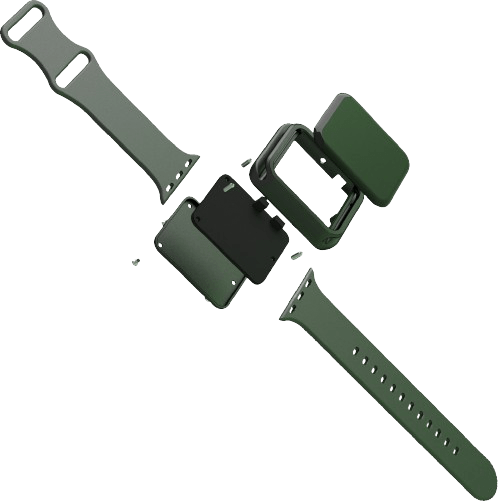
Background Study of an Invention
How to know if an invention already exists? The truth is that, through a background study of inventions, it can be determined whether the invention is registered or patented, both in the inventor's country of origin and in other countries. But, even if an invention is not patented, it may still exist. It is key to combine the search for background of an invention in patent records but also on commercial platforms.
The identification of invention patents that could affect the possibility of applying for a patent is carried out through three fundamental methods:
Method A – Semantic study.
Method B – International Patent Classification Codes.
Method C – Study of headlines
Do you want to conduct the search on your own?
Free Download: Instructions for Searching Patent Backgrounds for Inventions.
Patent Application Documentation
Taking as reference the analysis of our engineering team, as well as the main conclusions of the manufacturing process of the your working prototype, we will write the necessary documentation to formally file your patent application. It is relevant not to skip any steps. If there is no working prototype, we can hardly obtain an effective patent.
In some cases, due to the characteristics of the invention and its commercial potential, the patent application is filed after the completion of the basic engineering project. In this process, the instruction manual for manufacturing the prototype is determined, and the systems, designs, components, and any element relevant to the patent documentation process are identified.
In the case of Industrial Design applications, we can prepare, under the guidance of a licensed attorney in the United States and experienced in Europe, the necessary documentation, blueprints, and sketches."
In the case of Utility Models, although we discourage them in many cases, we can also help you prepare the memorandum. Only if we see it appropriate due to the commercial strategy and characteristics of the invention
Presentation and follow-up
The hard part will already be done; in this section, we will take care of the administrative procedures to file your patent. We will consider every detail to make it comprehensive yet precise, so it can truly meet your expectations and business needs.
If necessary, our team will respond to any inquiries that the corresponding Patent and Trademark Office may make.
The time to bring your ideas to life is now. We accompany you throughout the entire process: from idea to product.
San Juan Ingenieros, S. L, is the owner of the domain www.letsprototype.com, and in accordance with the General Data Protection Regulation (EU 1679/2016), we will process your data exclusively to handle your information request. You have the right to rectify or request the deletion of your data at any time via hello@letsprototype.com.