
Foldable electric cart for package delivery
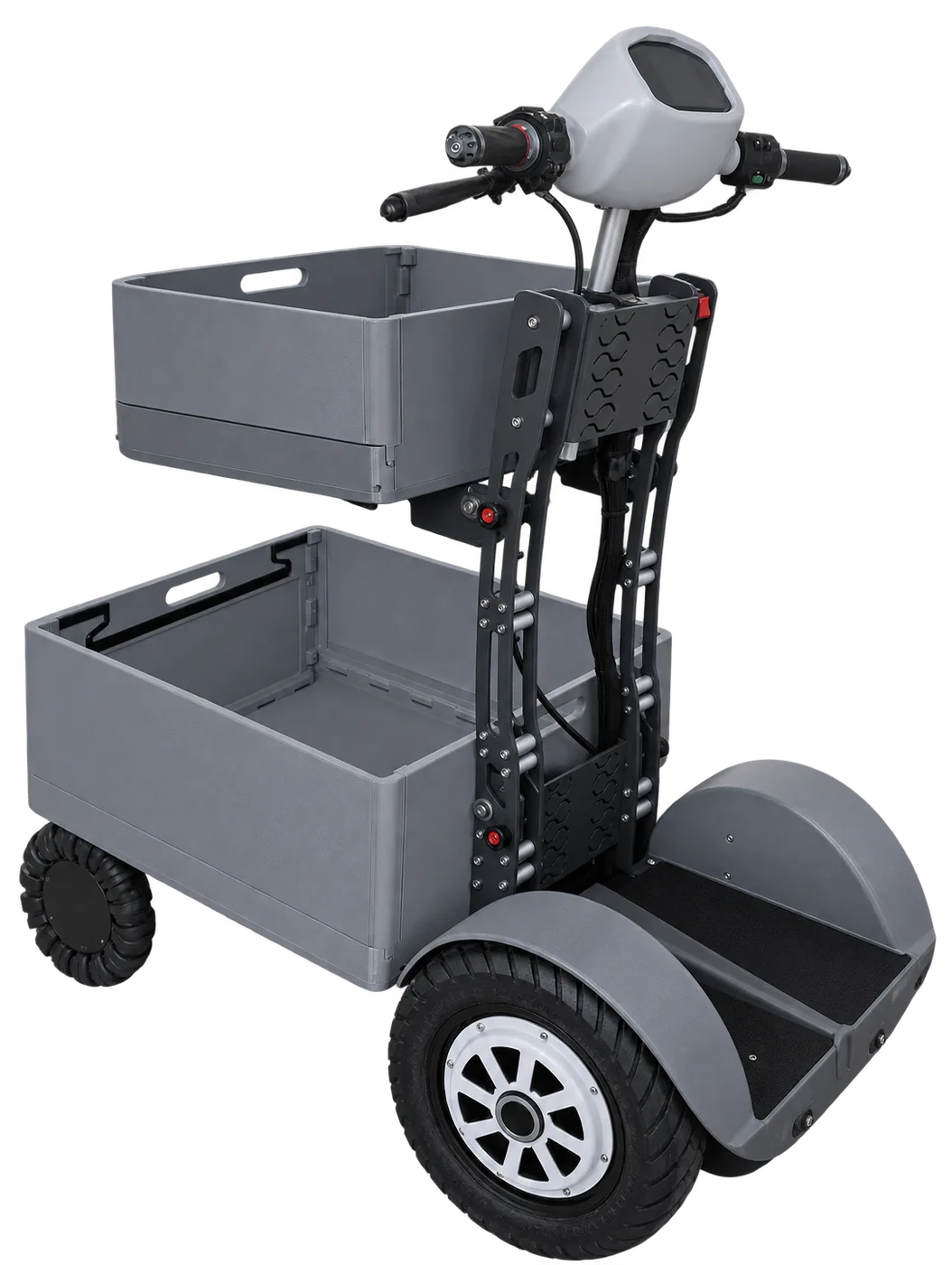
A foldable electric cart for delivering packages through buildings and housing estates where a conventional vehicle cannot enter. The courier rides on a platform and organises the load on two trays, one of which can be folded away.
The price includes design, functional prototyping, product testing and optimization.
Why design a foldable electric cart for deliveries?
Access where a vehicle cannot go
It lets you move packages through buildings and housing developments where a conventional vehicle cannot enter.
Organized load
Two trays let you separate and organize the parcels during delivery.
Foldable upper tray
The upper tray can be folded away to carry larger parcels.
Folding for transport
Folding reduces the cart’s volume so it can be moved and stored.
What the first foldable electric cart prototype includes
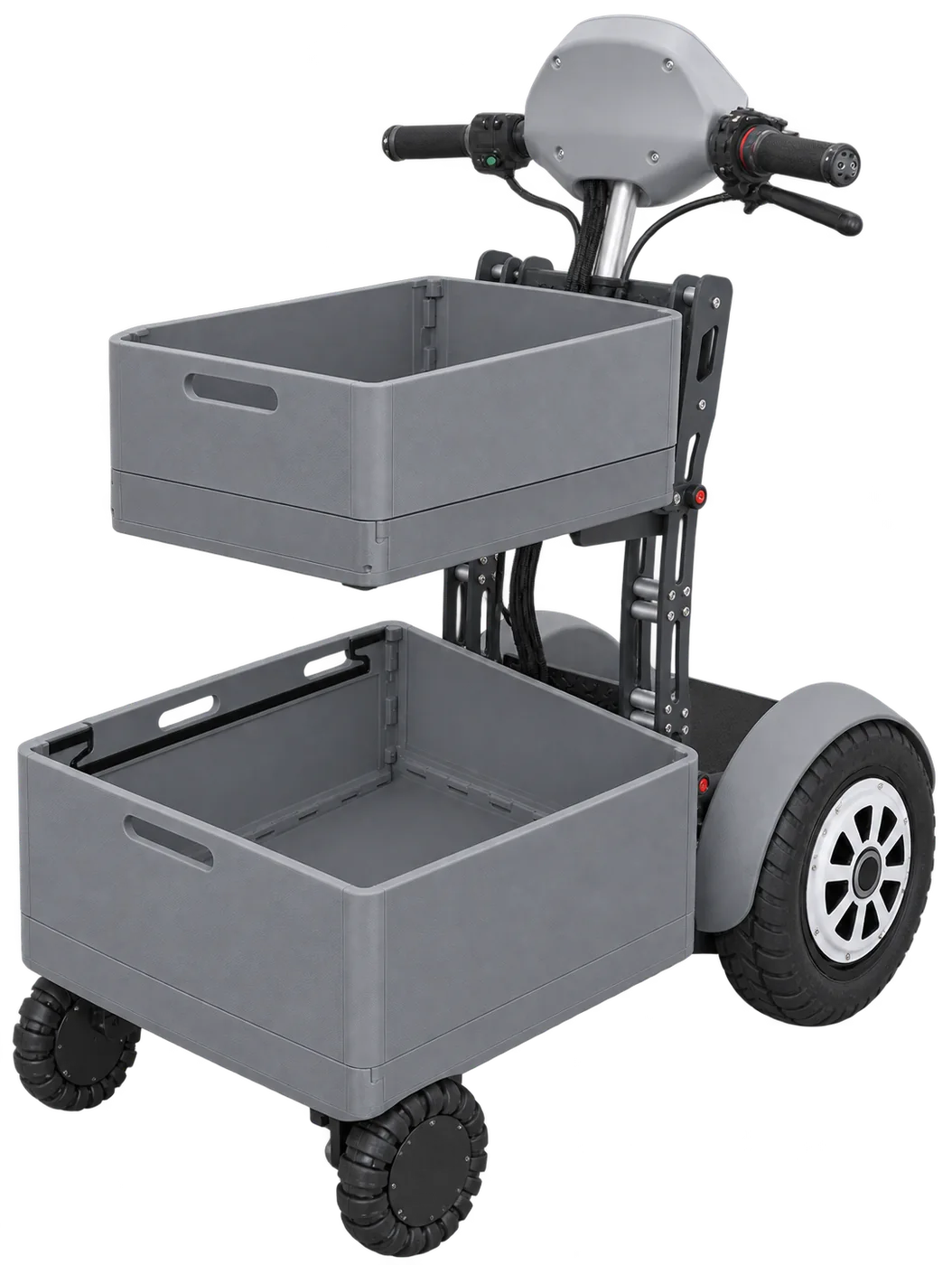
The frame is modular and supports the platform, the handlebar and the trays. Small wheels and the handlebar are designed to manoeuvre in tight spaces. The fold-away design is the key decision: a cart that cannot be stored or transported loses much of its usefulness in last-mile logistics.
Modular frame
A modular structure that supports the platform, the handlebar and the trays.
Driving platform
The platform on which the user stands while driving the cart.
Maneuverability
Small wheels and a handlebar designed for moving through tight spaces.
Cargo trays
Two trays to organize the packages; the upper one folds away.
Folding for transport
A foldable design to transport and store the cart easily.
How we develop an electric delivery cart
We start from how deliveries are made today: what is loaded, where the cart has to go and where it is stored. From that come the requirements for the frame, the folding system and the platform. Then we build the prototype to test manoeuvrability and adjust before thinking about manufacturing. If you have a mobility or logistics product idea, the first step is to define that real use.
Design challenges and who it is for
The challenge is balancing three things that get in each other’s way: the cart must be stable under load, narrow enough for doors and corridors, and compact once folded. Every decision on frame, wheels and trays affects the other two. A prototype lets you check that relationship with the product in your hands, not just on a drawing. This kind of project suits courier and logistics companies, housing-estate managers and entrepreneurs who want a light delivery vehicle.
Project lead: Foldable electric cart for package delivery

“A cart that goes where a vehicle cannot has to be agile, foldable and easy to load at the same time. The challenge was making the frame, the driving platform and the electronics work as a single product. If we could do this, we can surely do your idea.”
Let’s talk about your project
Do you have an idea like this? Tell us about your project.
Similar prototypes
 Capsule juice machine
Prepara zumo a partir de concentrado.
 Rinxor, a shaving accessory
An accessory designed to make a shaving routine cleaner and reduce the water used during the process.
 Electric car cable organizer
Retractable unit for the charging cable.
 Self-standing broom with a support mechanism
Folding legs that keep the broom upright.
 Telescopic fire pit
Steel fire pit that folds into a compact format.